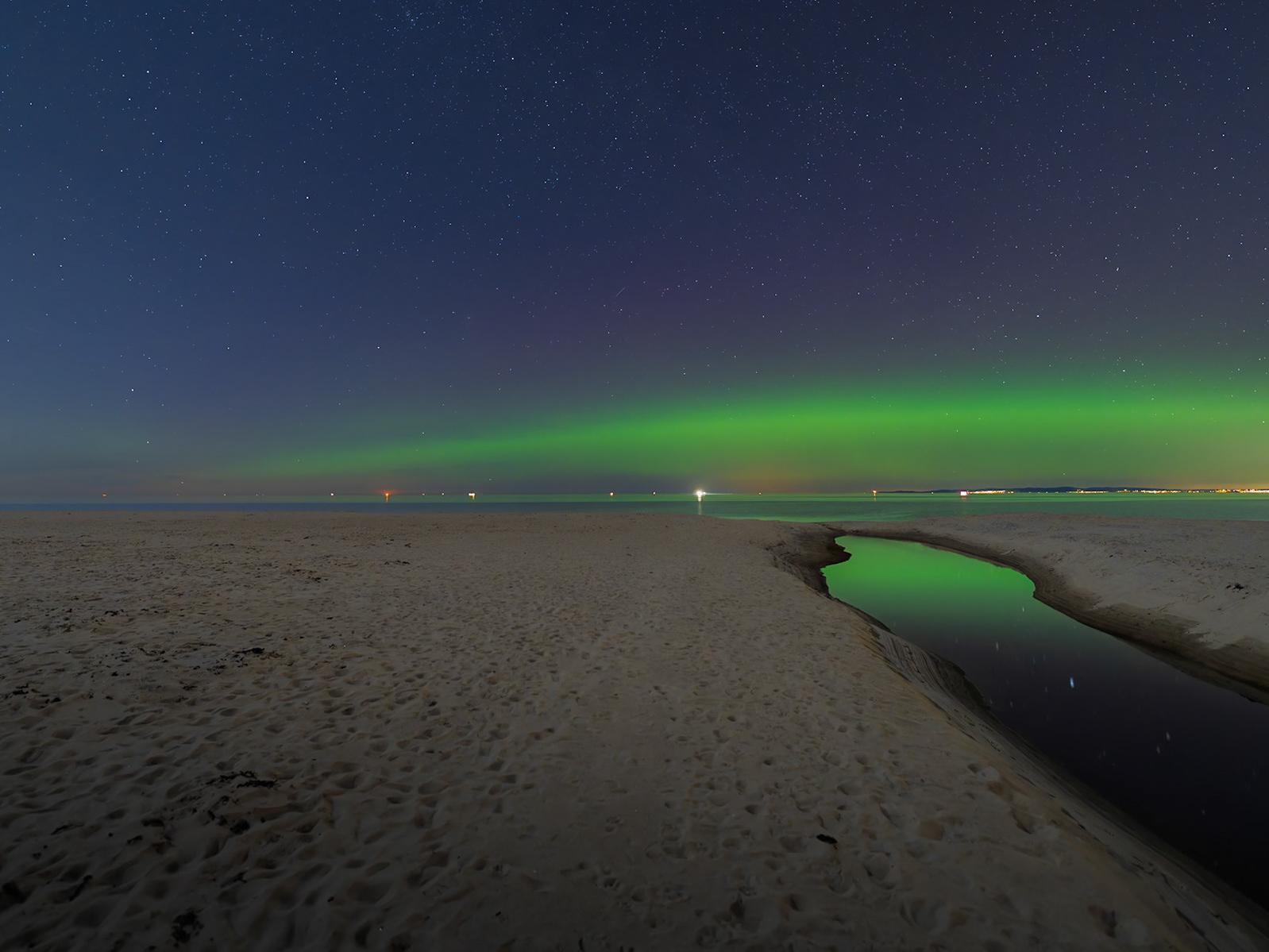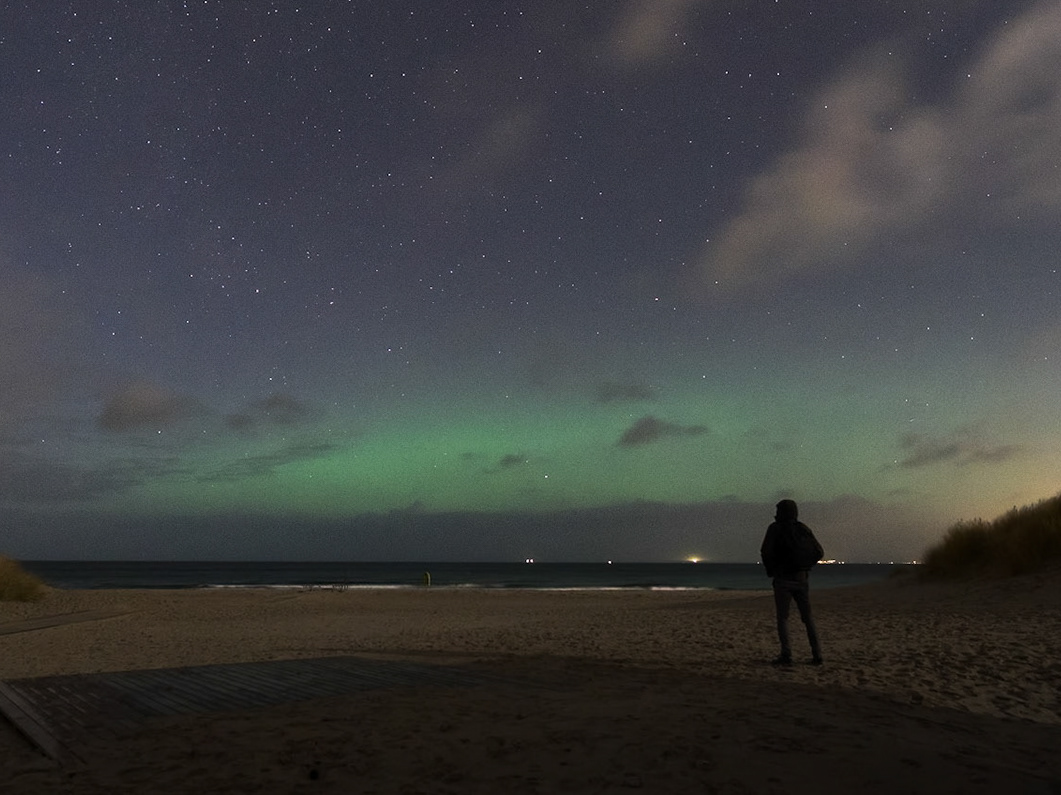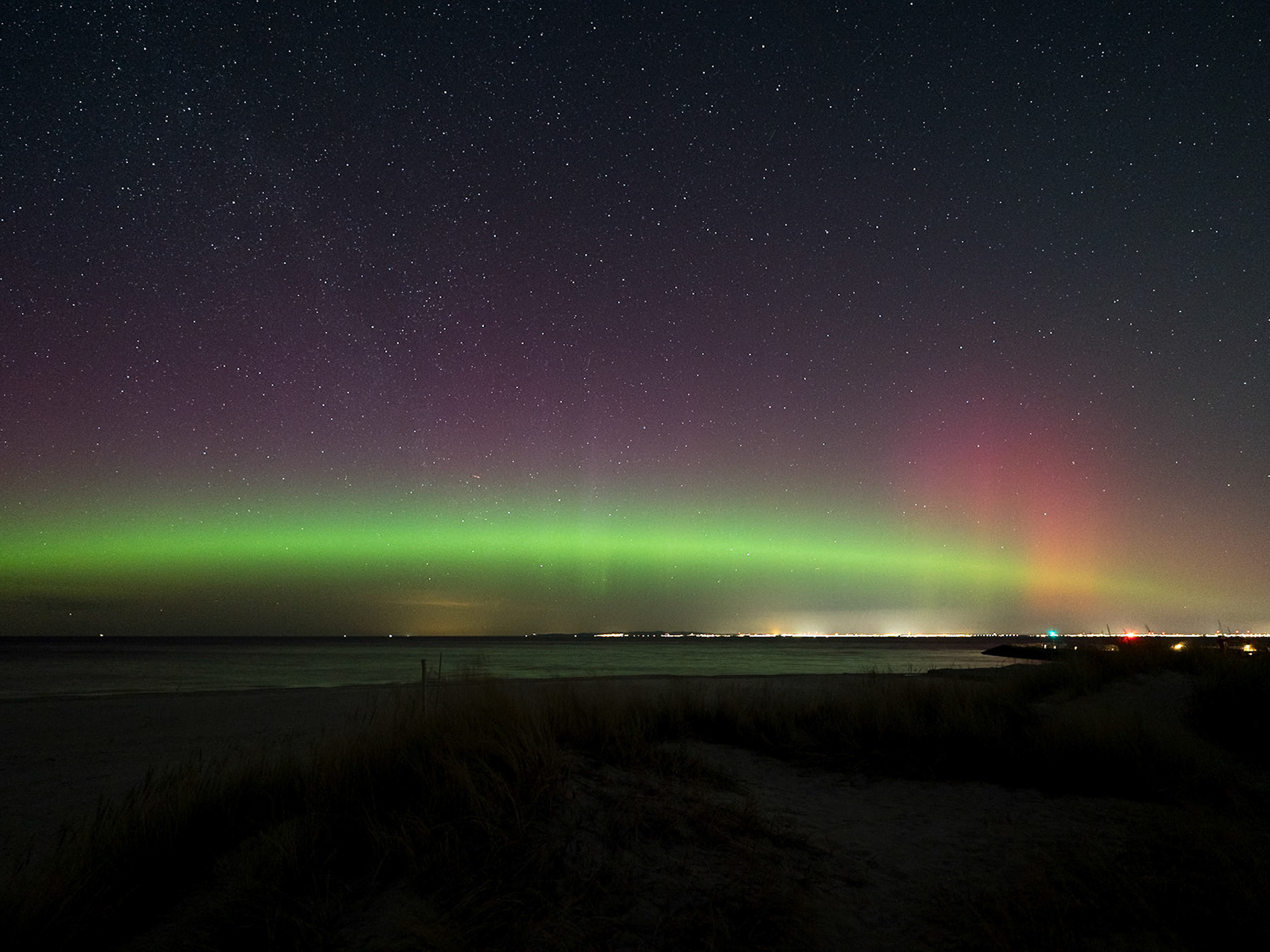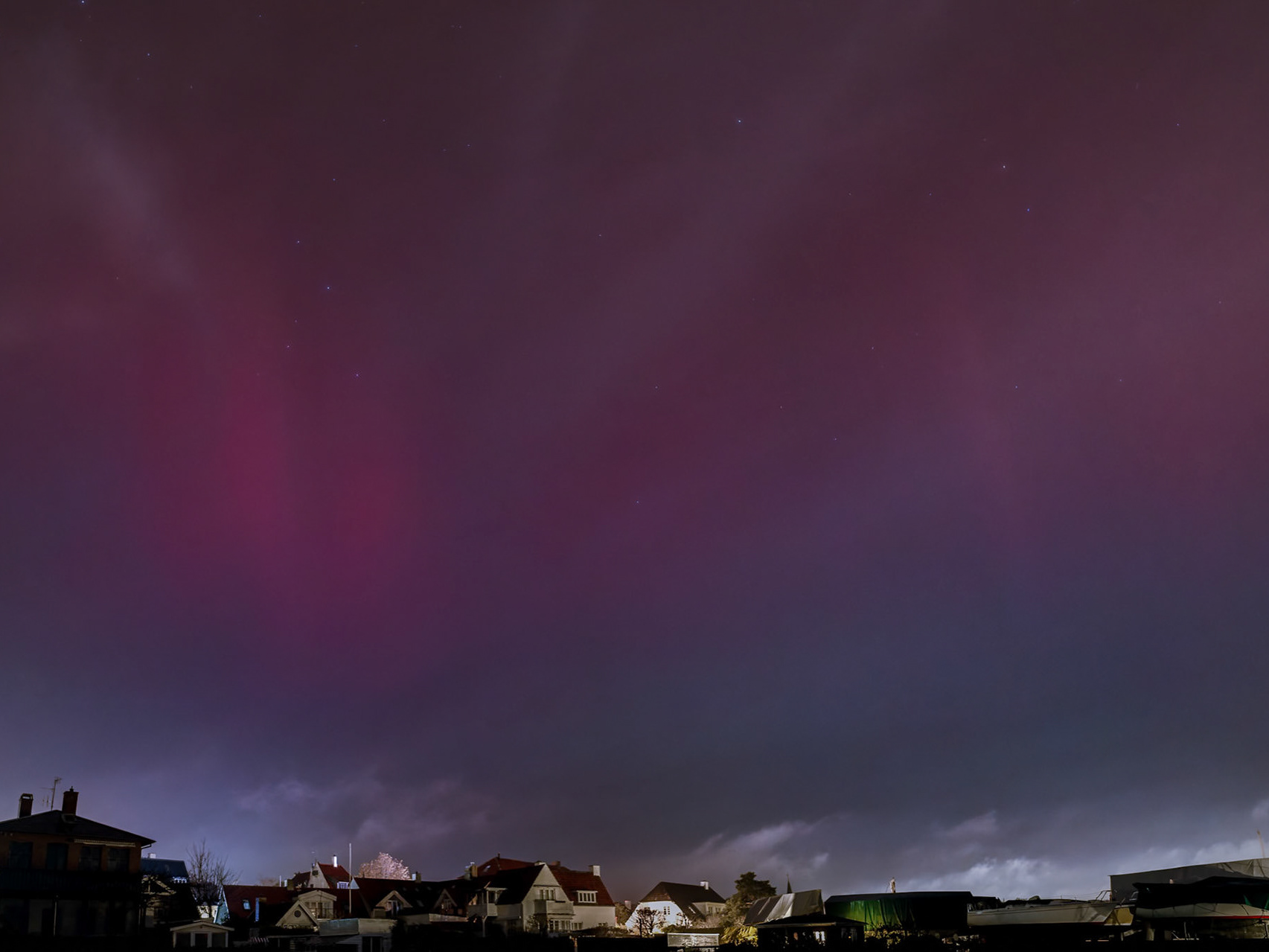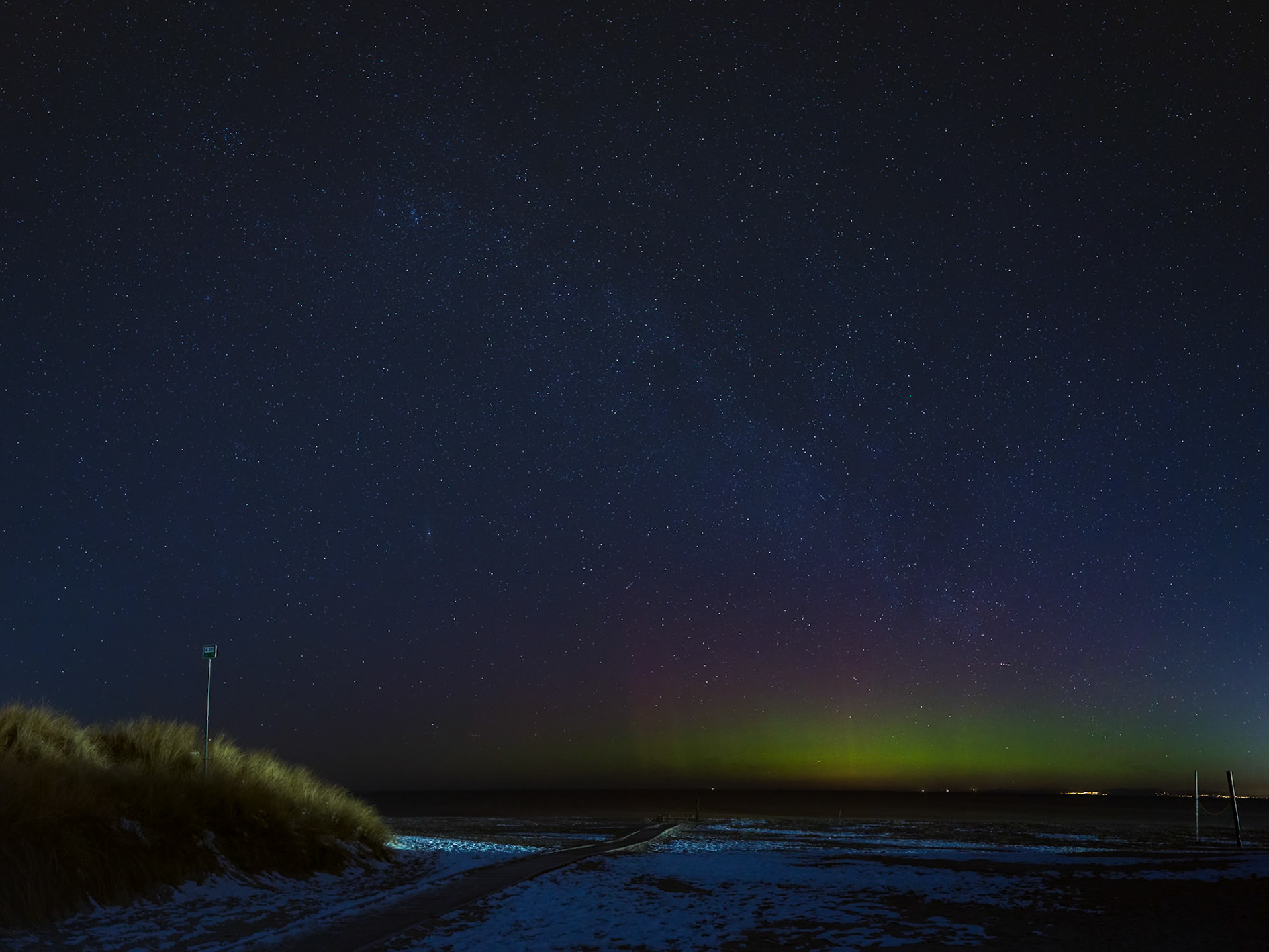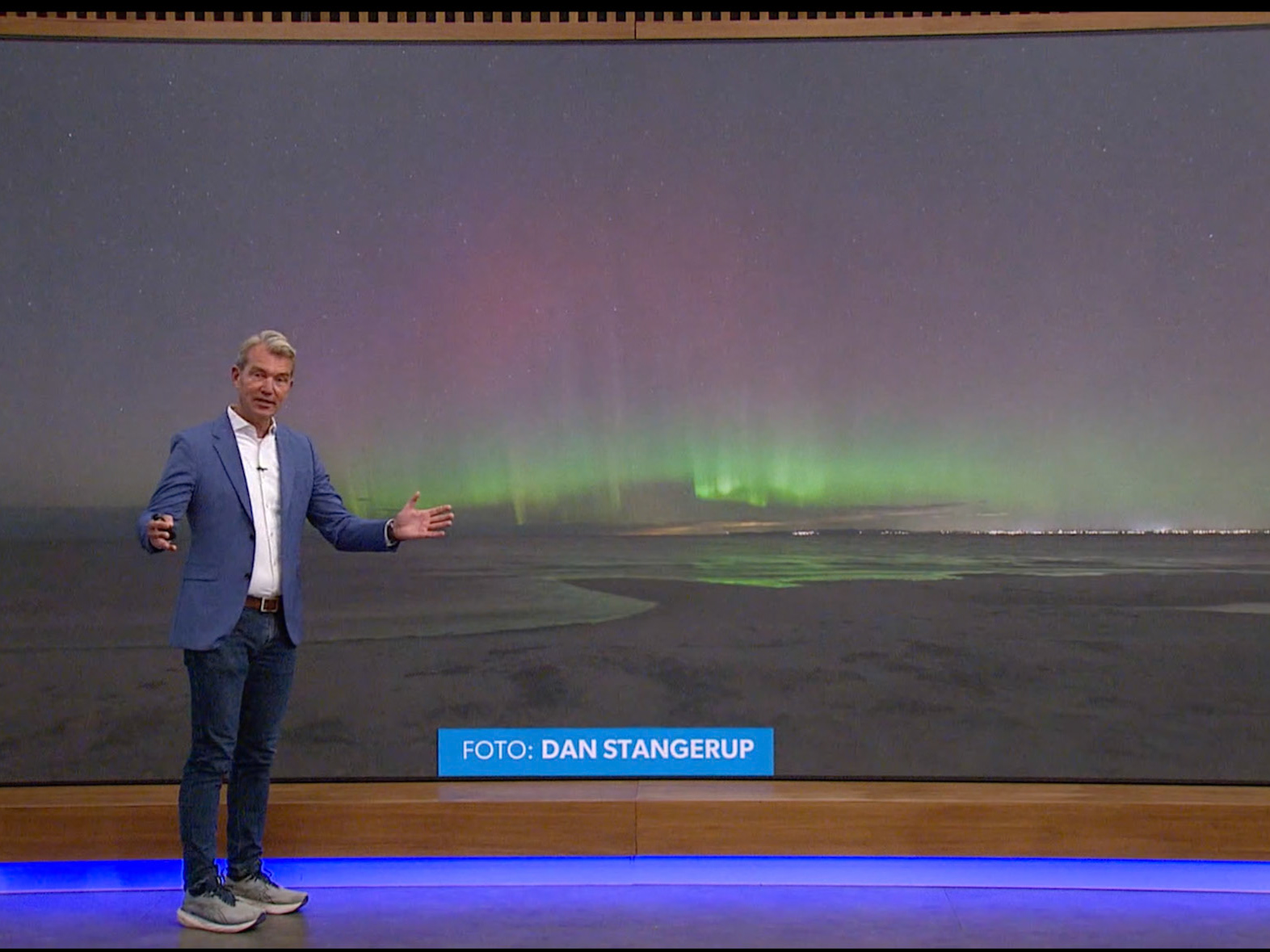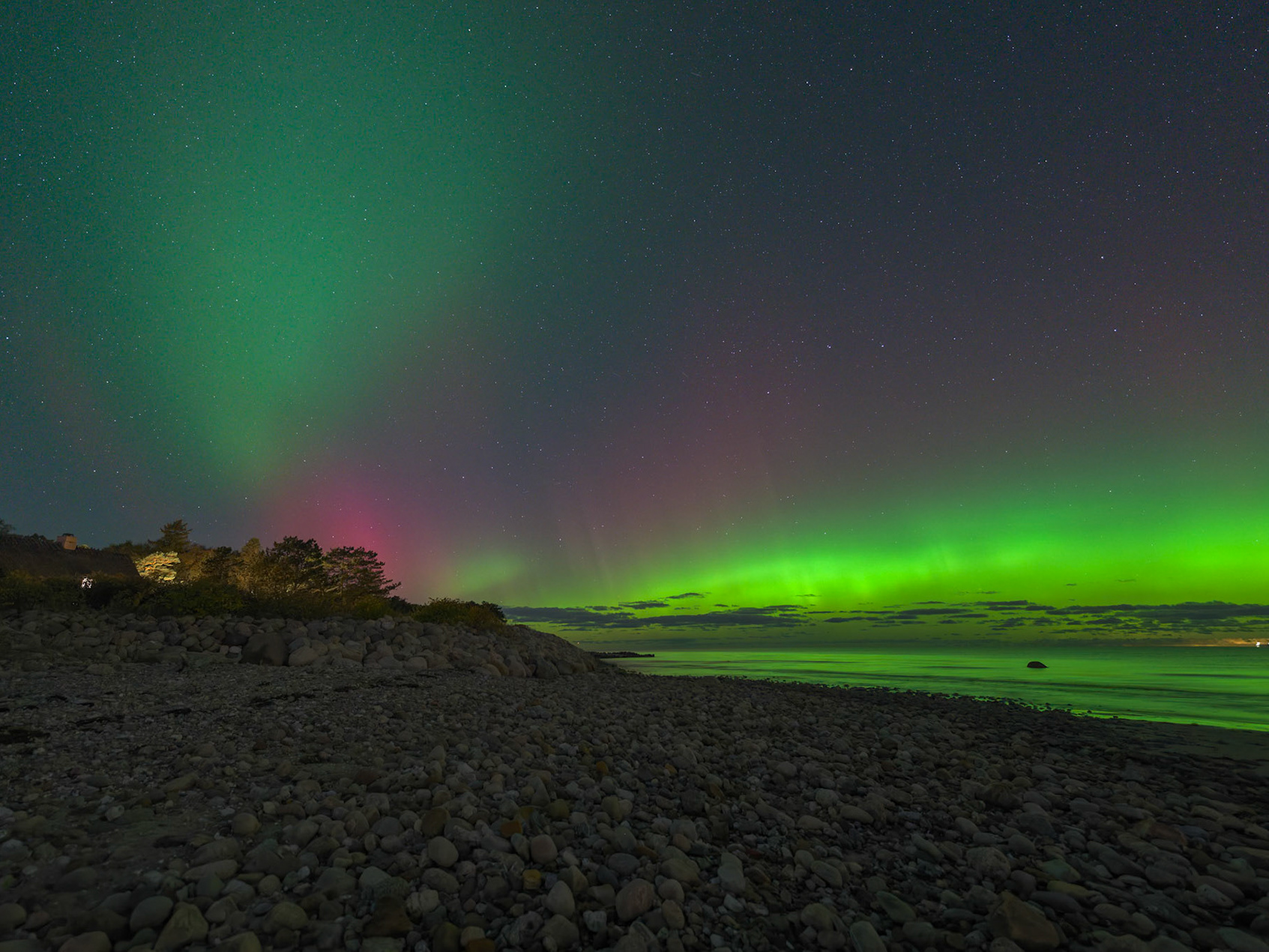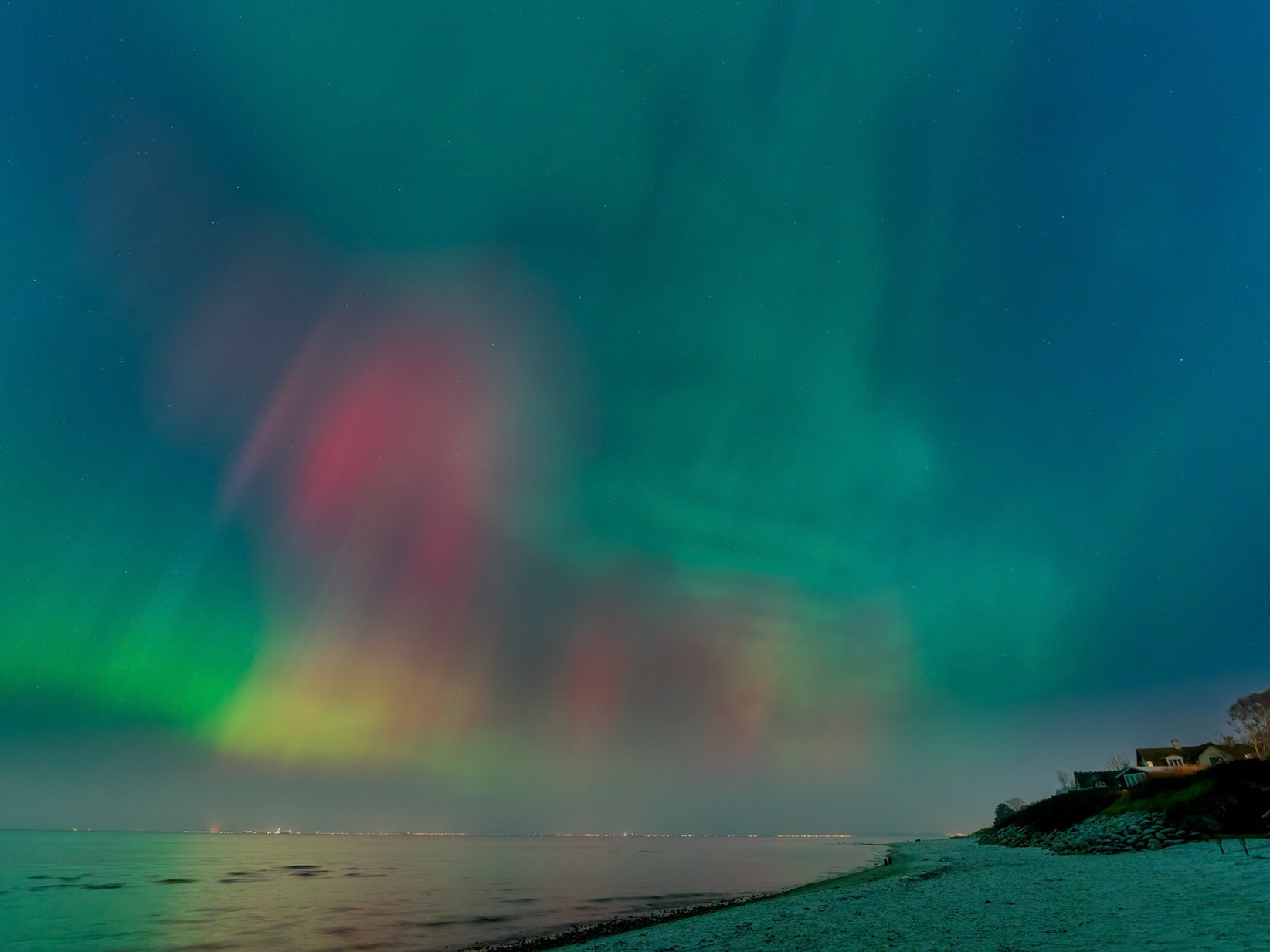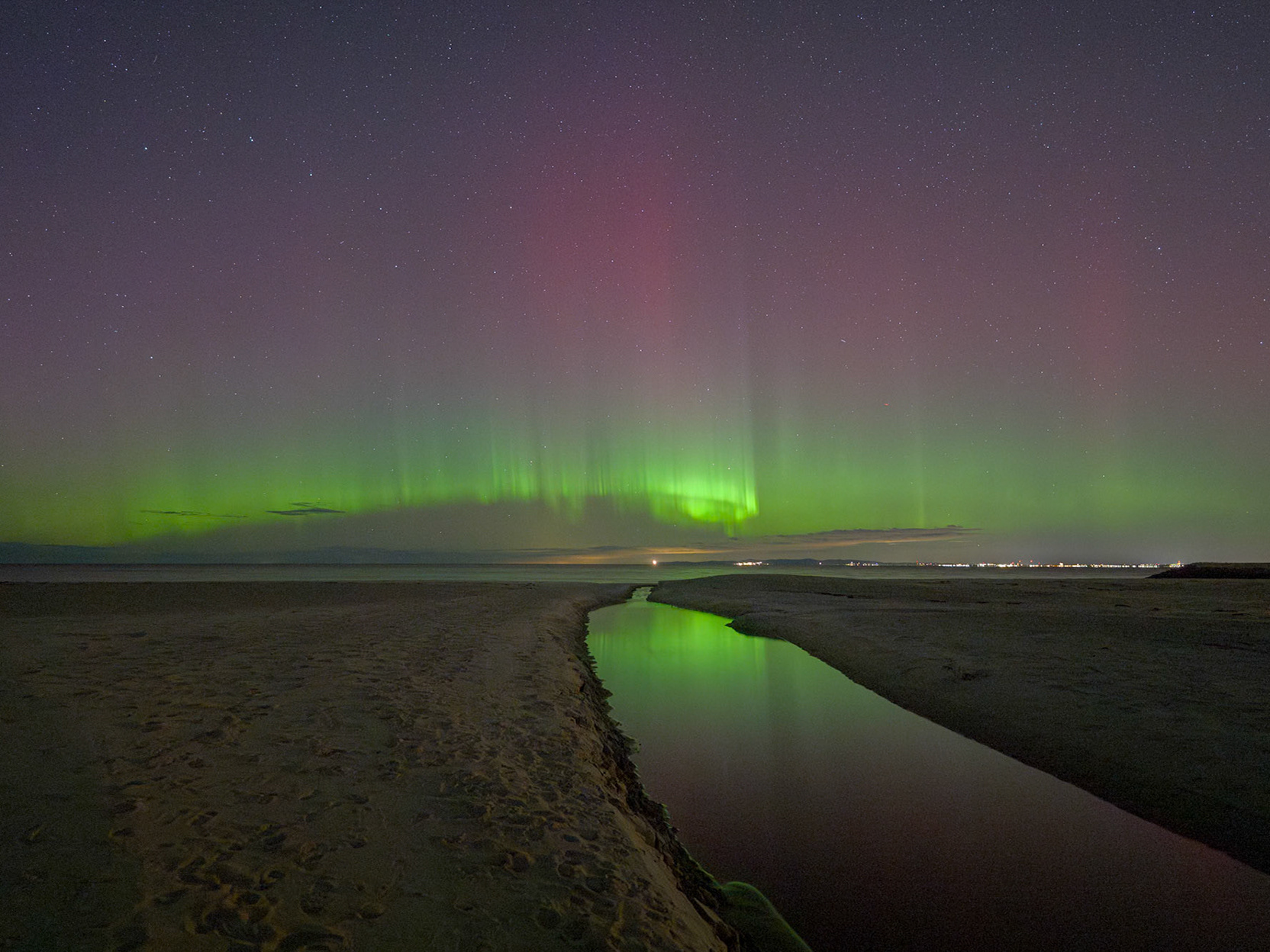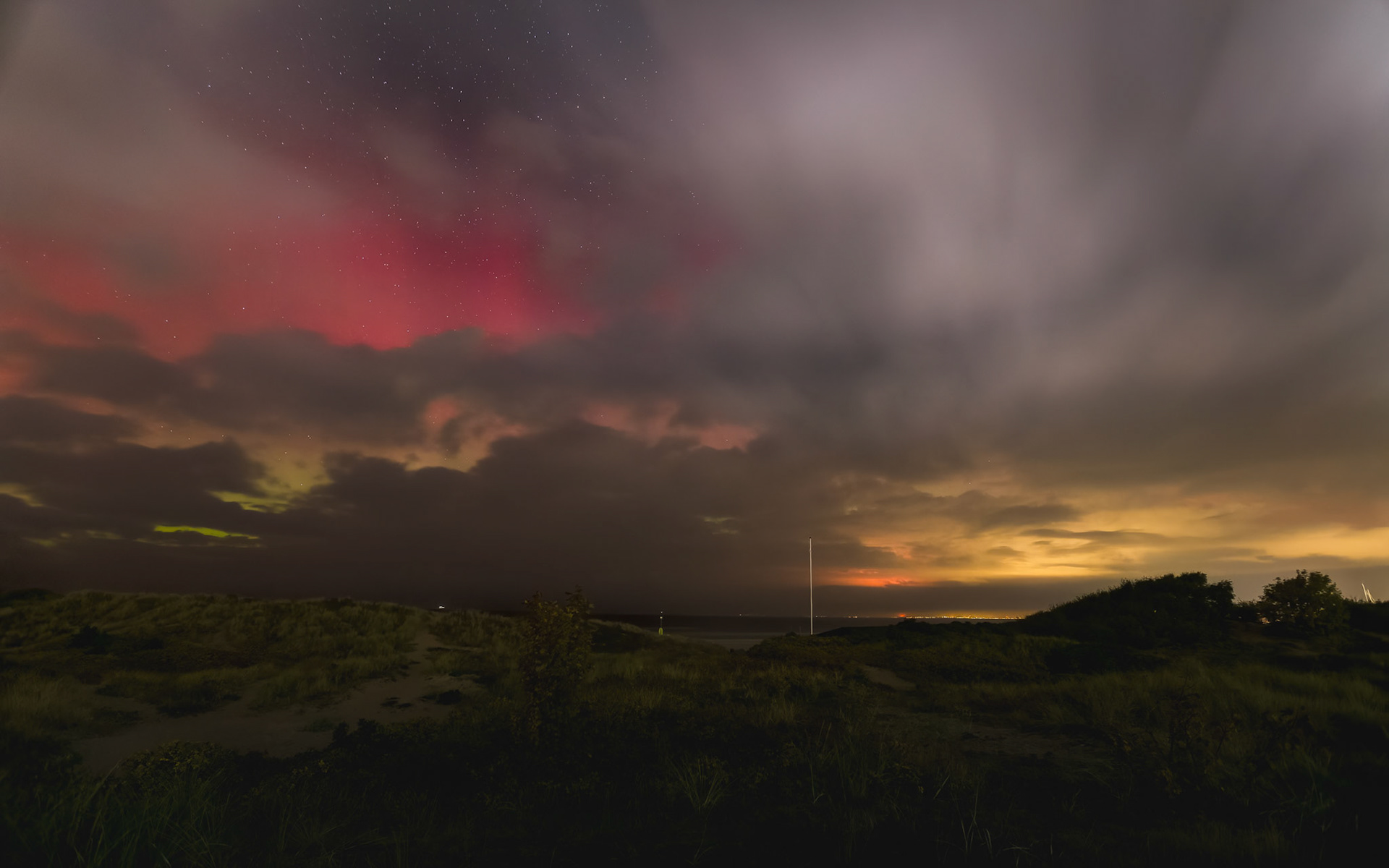
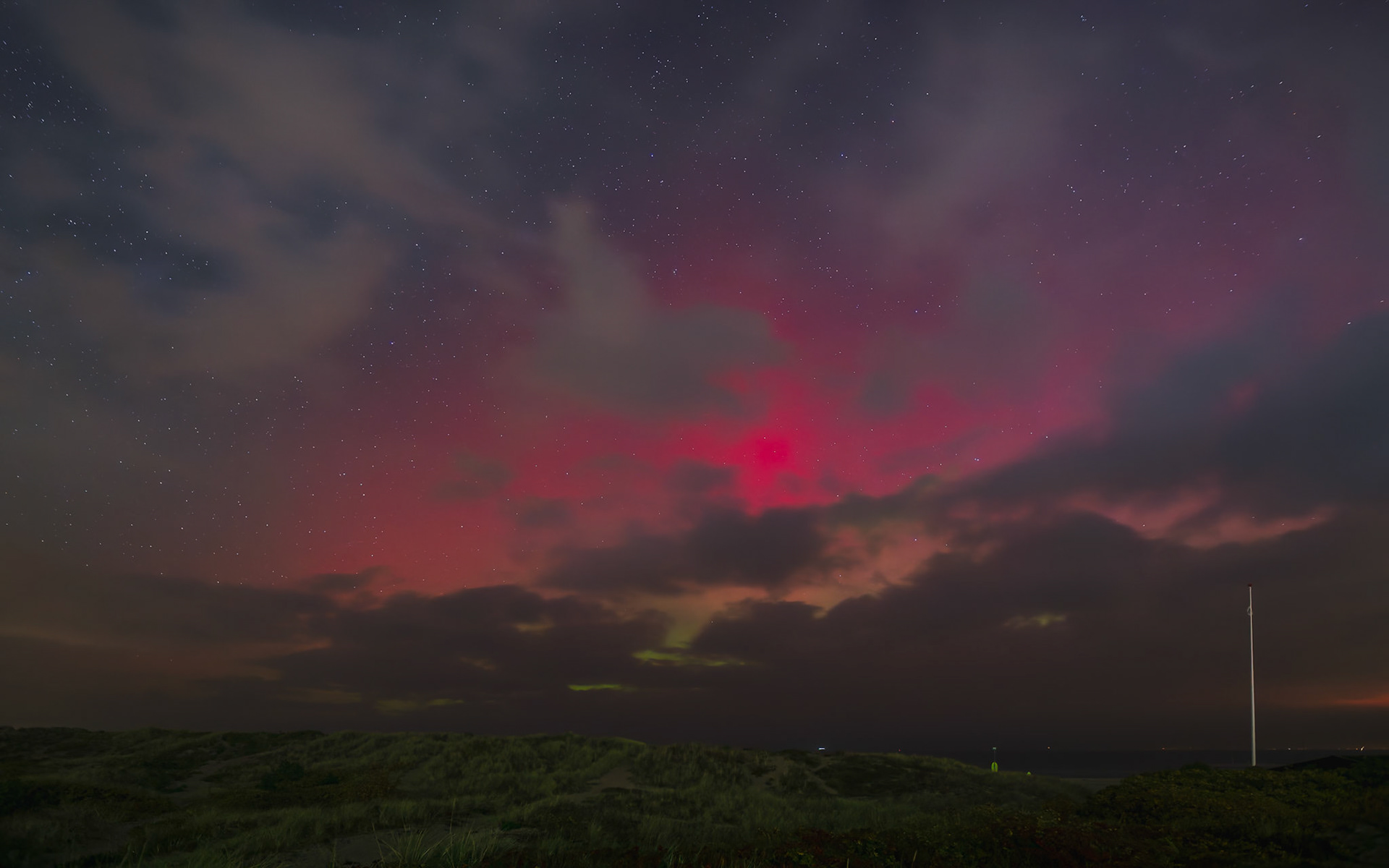
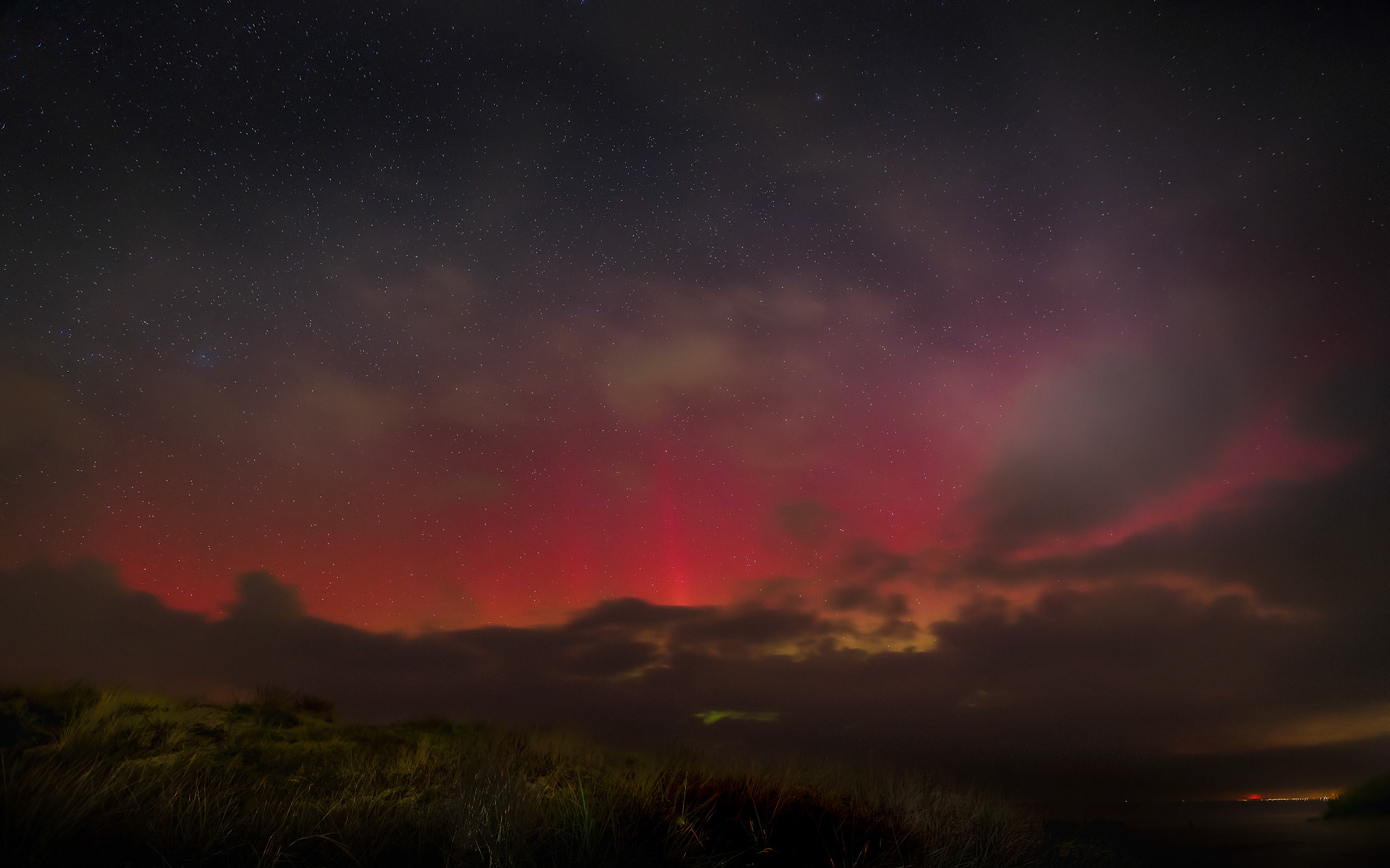
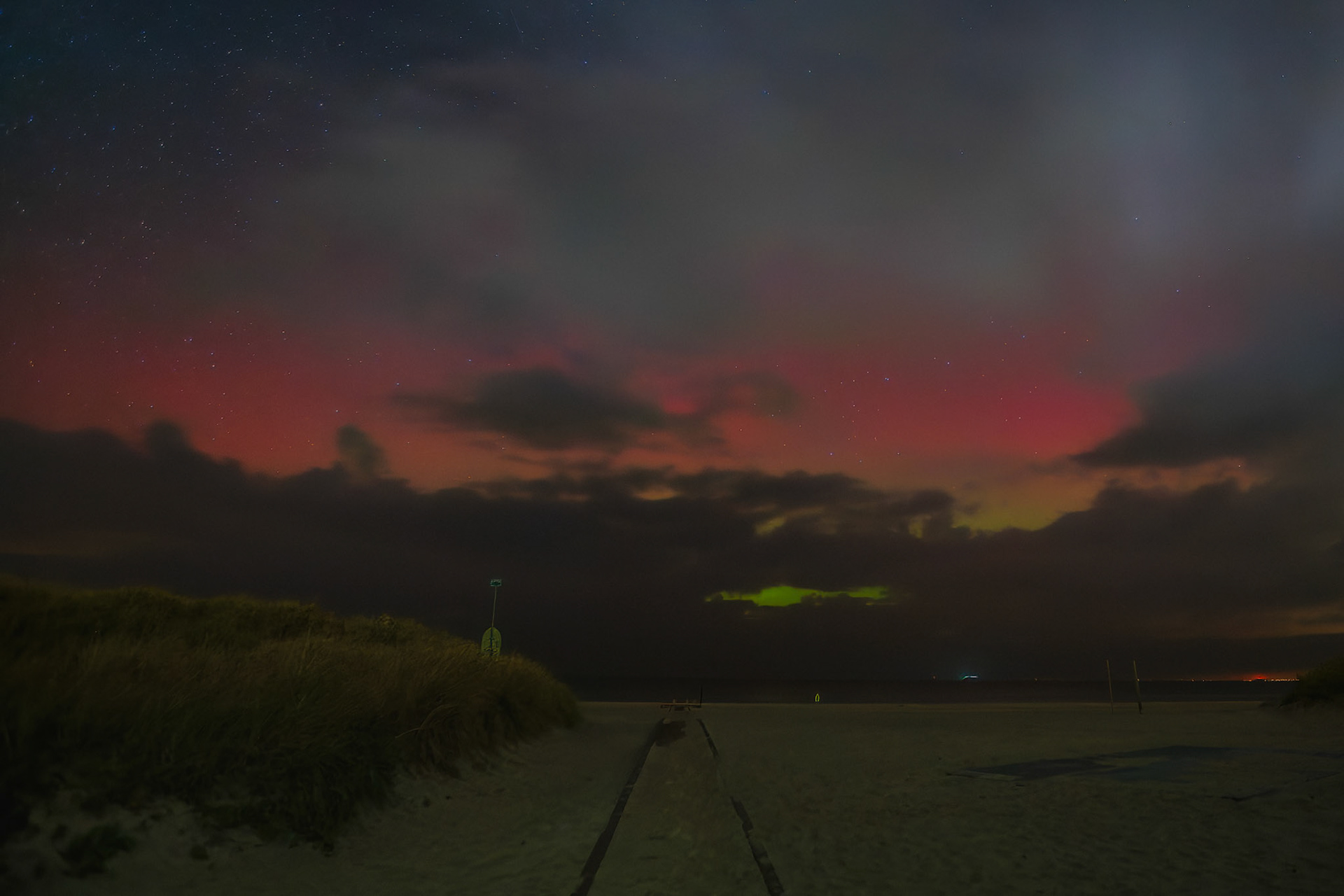
The night before, I’d seen locals sharing images of stunning red auroras, and I became determined to witness them for myself. The activity levels were still promising, so I decided to venture out despite the weather being heavily overcast in my area. It wasn’t until around midnight that a sliver of hope appeared on the map—clearer skies in the northern part of the region. Heading out to new locations in the dead of night isn’t something I’d usually recommend. Still, I drove across the coastline for about an hour, stopping at a few extremely dark spots. Without any moonlight, I could barely see where to place my feet. After an hour of fruitless searching under a blanket of clouds, I finally settled at a beach I knew well. Still, the auroras remained hidden from view, but when I checked my phone’s camera, faint patches of light emerged in the clouds—something my eyes couldn’t catch. Excited, I tried taking some shots, but without a tripod, the images came out noisy and blurred. After a peaceful half-hour inhaling the fresh sea air with no sign of clearing, I reluctantly headed back to the car. Then, a thought struck me—my DSLR! It was already set up, waiting to be tested for night photography, something I’d never done before (I have only used my mobile camera for auroras untill now) . I decided to give it a try right there, next to the car, setting up the tripod to see if my rehearsed settings would hold up. The first picture blew me away - clear contrast and vibrant colors showed up instantly on the screen. I'm so glad I didn’t leave. The sky cleared, if only briefly, for about 30 minutes, and what I captured was breathtaking. Deep, reddish hues painted the northern sky. Facing north, I could even make out the subtle glow of lights from the southern coast of Sweden across the sea.