
Nature Photography – Landscape • Wildlife • Northern Lights
“Our imagination is struck only by what is great;
but the lover of natural philosophy should reflect equally on little things.”
—Alexander von Humboldt
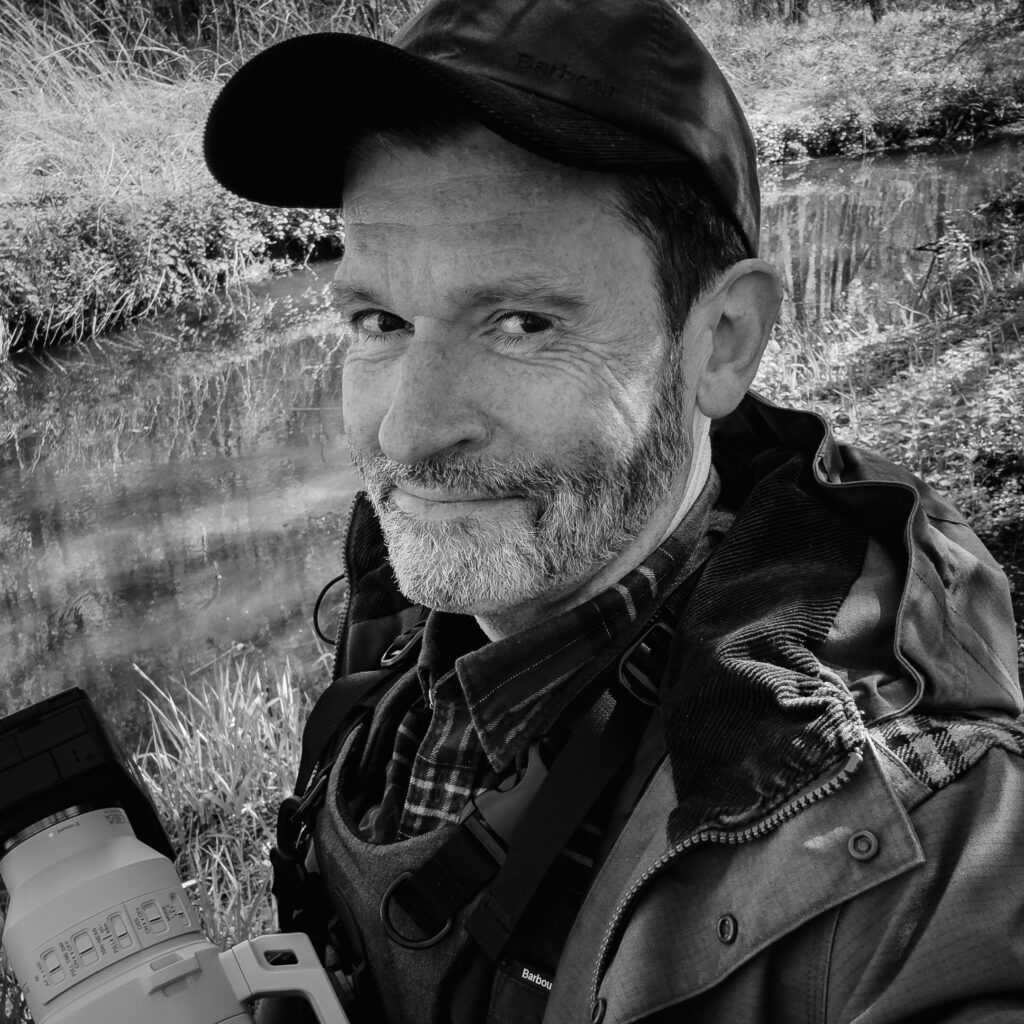
I am a fine art nature photographer exploring landscapes, birds and the night sky as interconnected expressions of the natural world. I am particularly drawn to natural light — how it transforms a landscape, reveals an animal or creates a fleeting atmosphere that may exist for only a few seconds.
This interest in light extends from the subtle changes of daylight to the otherworldly illumination of the aurora. In both, I am drawn to transient phenomena that cannot be staged or repeated — moments in which light changes our perception of the natural environment.
My approach is both documentarian and interpretative. I do not construct scenes or pursue spectacle. Instead, I work within the existing structure of a place — its spatial relationships, light, textures and ecological integrity.
Before photography, I spent many years in the music industry as a musician and producer. That background shaped my sensitivity to rhythm, structure and subtle tonal variation — elements that continue to inform how I compose and interpret natural environments.
Since childhood, I have moved through woodlands, coastlines and open fields with an attentive curiosity — observing seasonal change, shifting light, plant forms and bird behaviour. Photography became a continuation of that attention.
Rather than pursuing isolated moments of spectacle or iconic locations, I am increasingly drawn to the quieter and more transient aspects of nature — subtle behavioural details, shifting atmospheres, seasonal transitions and ordinary states that together form a larger emotional and ecological whole.
Authentic Photography — My Approach to Image Editing
I enhance what I photographed — I don’t create what I didn’t photograph.
I consider an image authentic when it remains a truthful representation of what I actually photographed.
I use post-processing to improve image quality and bring out details and tonal information present and captured by the camera. This includes RAW development, colour and tonal adjustments, local adjustments, sharpening, noise reduction and AI-assisted denoising.
I also use classical techniques such as HDR and exposure blending, focus stacking and panoramas. When combining multiple captures, they must represent the same scene and location. These techniques are used to overcome technical limitations of the camera capture, not to create a scene that never existed.
I do not use generative AI or even traditional compositing to add or replace elements of a photograph. I do not replace skies or backgrounds, add objects or animals, combine different locations, or otherwise create image content that was not present when I made the original photographs.
AI can be a useful processing tool, but I use it only to improve or recover information from my photographs. When using AI-based processing such as denoising, I inspect the result carefully to ensure that it has not introduced artificial details or other content that was not present in the original capture.
Dan Stangerup
Nature as it Exists – Presence over spectacle